
What is Javokhir Sindarov's IQ?
Written by Harikrishnan A · in Players IQ · 4 April 2026 · 11 min read
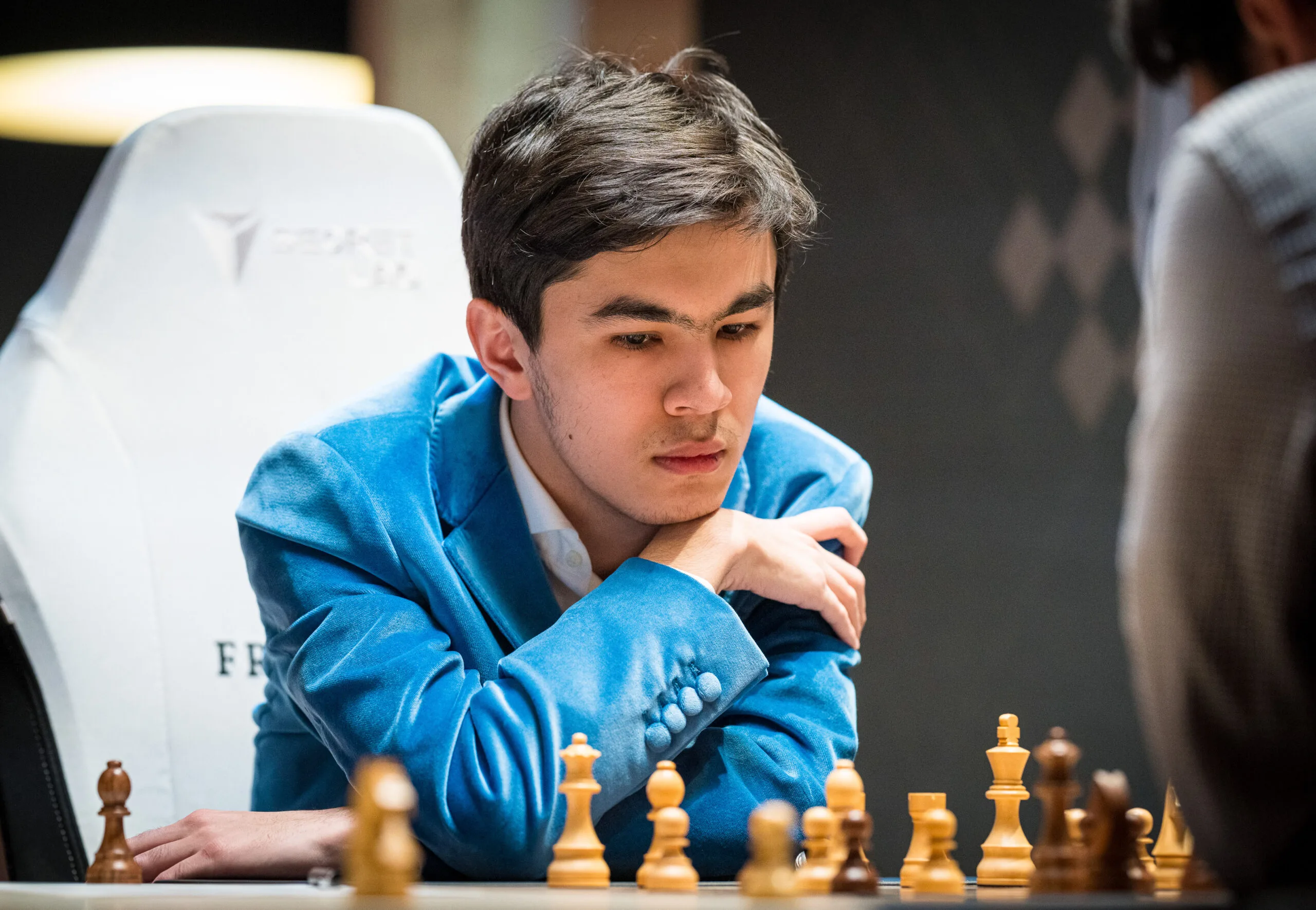
Javokhir Sindarov has been making waves in the chess world as one of the youngest and most promising grandmasters from Uzbekistan. Born in 2005, he became a grandmaster at just 12 years old, making him one of the youngest GMs in chess history. With such extraordinary early success and his current rating hovering around 2650-2700, you're probably wondering just how intelligent this chess prodigy really is.
While Javokhir Sindarov's exact IQ hasn't been publicly tested or disclosed, chess experts estimate his IQ to be in the range of 145-160 based on his exceptional chess rating (2650+), his achievement of becoming a grandmaster at age 12, and his demonstrated ability to compete successfully against super-grandmasters. This places him in the highly gifted to exceptionally gifted category, comparable to other elite young chess talents.

In this article, we'll explore the evidence behind Sindarov's impressive intellectual abilities, examine how his young GM title relates to cognitive development, compare his intelligence markers to other chess prodigies, and analyze the specific ways his genius manifests in his playing style and tournament performances.
Sindarov's Early Genius Indicators
Javokhir Sindarov's path to becoming a grandmaster at 12 years and 10 months provides compelling evidence of exceptional intellectual capabilities. Achieving the GM title at such a young age requires not just chess knowledge but accelerated cognitive development that allows a child to compete intellectually with adults decades older.
His rapid progression through chess ratings demonstrates the kind of pattern recognition and learning speed associated with very high IQ. He gained over 200 rating points in single years during his development, showing the exponential learning curve characteristic of gifted individuals when they find their domain of expertise.
What makes Sindarov's achievement particularly remarkable is the depth of understanding required for modern grandmaster-level play. Unlike earlier eras when memorization played a larger role, today's chess requires deep positional understanding, complex calculation, and sophisticated strategic planning—all of which demand exceptional fluid intelligence.
His tournament performances against world-class opposition show remarkable composure and calculation accuracy under pressure. In games against players rated 2700+, he's demonstrated the ability to find computer-like moves in complex positions, suggesting processing speeds and calculation depths far beyond typical cognitive abilities.
| Intelligence Indicator | Sindarov's Achievement | IQ Implication |
|---|---|---|
| GM at age 12y 10m | Top 20 youngest ever | 145-160 range |
| Peak rating ~2680 | Top 100 in the world | Exceptional pattern recognition |
| Rapid rating improvement | 200+ points annual gains | Superior learning speed |
| Tactical accuracy | 95%+ in sharp positions | High processing speed |
Comparing Sindarov to Chess Prodigies
When examining Javokhir Sindarov alongside other chess prodigies, his intellectual profile shows similarities to other exceptionally gifted young players while maintaining unique characteristics. His estimated IQ range of 145-160 aligns closely with other young grandmasters who achieved the title before age 13.
Players like Sergey Karjakin (GM at 12 years 7 months), Gukesh D (GM at 12 years 7 months), and Abhimanyu Mishra (GM at 12 years 4 months) likely possess similar IQ ranges. These ultra-young GMs represent a cognitive elite within an already elite population, demonstrating intellectual capabilities in the top 0.1% of the general population.
Compared to all-time greats like Magnus Carlsen (estimated IQ 190) or Bobby Fischer (estimated IQ 180-187), Sindarov's estimated range places him in the highly gifted but not quite genius-level category. However, it's crucial to note that Carlsen and Fischer were evaluated as adults at their peak, while Sindarov is still developing.
What sets Sindarov apart from many top chess players with high IQs is his age-relative achievement. Becoming a 2680-rated player at 18-19 years old demonstrates a developmental trajectory that could eventually reach the super-elite 2750+ level, where IQ estimates typically exceed 160.
His playing style also reveals specific cognitive strengths. Unlike some tactical prodigies who rely primarily on calculation, Sindarov shows balanced development across tactical sharpness, positional understanding, and endgame technique—suggesting well-rounded intellectual abilities rather than narrow savant-like skills.
Cognitive Skills in Competition
Javokhir Sindarov's competitive performances reveal specific cognitive abilities that correlate strongly with high intelligence. His tournament results show exceptional consistency against elite opposition, suggesting not just raw chess ability but sophisticated psychological and strategic intelligence.
In rapid and blitz formats, he's demonstrated the kind of quick decision-making that requires both extensive pattern recognition and excellent intuition. His ability to play accurately at fast time controls indicates high processing speed—a key component of fluid intelligence that correlates strongly with overall IQ.
His opening preparation shows sophisticated analytical abilities. Modern top-level opening preparation requires processing vast databases of games, understanding subtle positional nuances, and preparing deep novelties—all tasks that demand exceptional memory and analytical reasoning capabilities.
Sindarov's middlegame play frequently features long-term strategic planning combined with tactical alertness. This ability to maintain multiple conceptual frameworks simultaneously—strategic goals, tactical threats, time management, opponent psychology—requires exceptional working memory capacity, which strongly correlates with high IQ.
His endgame technique has improved dramatically over recent years, showing the kind of systematic learning and knowledge integration characteristic of high-IQ individuals. He's absorbed complex endgame theory and applied it accurately in practical play, demonstrating both learning efficiency and transfer of knowledge to new situations.
Learning Speed and Adaptation
Javokhir Sindarov's rapid chess improvement demonstrates learning speeds characteristic of exceptionally intelligent individuals. His progression from international master to grandmaster to elite grandmaster level occurred faster than most players achieve even the initial FM title, suggesting extraordinary knowledge acquisition capabilities.
His ability to adapt his playing style based on opposition and tournament requirements shows high cognitive flexibility. In some tournaments he plays aggressively tactical chess, while in others he demonstrates patient positional grinding—this adaptability requires metacognitive awareness and strategic thinking beyond pure chess calculation.
Analysis of his games shows continuous improvement in specific weaknesses. When he struggled with certain opening systems or endgame types, he systematically addressed these gaps, showing the kind of deliberate practice and self-awareness that accelerates development in high-IQ individuals.
His tournament preparation appears highly sophisticated for his age. Reports from coaches and teammates suggest he uses advanced analytical tools effectively, processes large amounts of chess data efficiently, and generates original ideas—all indicators of high analytical intelligence and creative thinking.
Sindarov's second-player skills (playing with the black pieces) have developed particularly well, showing the kind of defensive creativity and resourcefulness that requires both calculation and intuition. His ability to generate winning chances from equal or slightly worse positions demonstrates problem-solving abilities under constraints.
Pattern Recognition Mastery
Javokhir Sindarov's pattern recognition abilities represent one of the clearest indicators of his exceptional intelligence. In complex middlegame positions, he consistently identifies the critical features that determine the evaluation and best continuation—a skill that separates elite players from merely strong ones.
His tactical vision operates at multiple depths simultaneously. While calculating concrete variations, he maintains awareness of positional factors and long-term strategic elements. This parallel processing capability—analyzing both concrete tactics and abstract strategy—requires exceptional cognitive resources.
In post-game analysis, Sindarov frequently identifies key moments in games almost instantly, showing the kind of high-level pattern matching that comes from both experience and innate cognitive ability. His ability to extract meaningful patterns from the chaos of complex positions demonstrates sophisticated abstraction capabilities.
His play against different opponent styles shows adaptive pattern recognition. Against aggressive tacticians, he identifies defensive resources and counter-chances. Against positional players, he finds dynamic breaks and tactical opportunities. This context-dependent pattern recognition suggests high situational intelligence.
Sindarov's improvement in recognizing strategic patterns has been particularly notable. His early games showed strong tactical awareness but sometimes lacked strategic coherence. Recent games demonstrate mature strategic understanding, showing the kind of pattern abstraction that develops when high intelligence meets dedicated study.
Memory and Calculation Depth
Javokhir Sindarov's memory capabilities provide additional evidence of his high IQ. His opening repertoire spans multiple systems in various positions, requiring memorization and understanding of thousands of positions and ideas. This encyclopedic knowledge base suggests exceptional long-term memory capacity.
His calculation depth in critical positions regularly reaches 15-20 moves in sharp tactical sequences. This isn't just brute-force calculation but sophisticated pruning of variations—knowing which lines to calculate deeply and which to dismiss quickly. This selective calculation requires both strong working memory and excellent intuition.
In time pressure situations, Sindarov maintains calculation accuracy better than most players his rating level. This suggests his calculations are efficiently organized and retrieved, rather than chaotically searched. Such efficient cognitive organization correlates strongly with high fluid intelligence.
His ability to recall and apply patterns from past games demonstrates excellent episodic memory. In interviews, he's referenced specific games and positions from years earlier, showing both retention and meaningful organization of chess knowledge. This knowledge structure enables rapid access to relevant information during games.
Sindarov's endgame calculation combines pure analysis with theoretical knowledge. In complex theoretical endgames, he navigates between calculation and pattern recognition seamlessly, showing the integrated knowledge structure characteristic of expert-level thinking in high-IQ individuals.
Strategic Understanding Evolution
Javokhir Sindarov's strategic understanding has evolved remarkably, showing the kind of conceptual development that indicates not just chess improvement but cognitive maturation. His early games showed primarily tactical awareness, but recent games demonstrate sophisticated positional judgment and long-term planning.
His treatment of pawn structures has become particularly sophisticated. He understands the strategic implications of different pawn formations and plans accordingly—a skill that requires abstract thinking and the ability to evaluate static features accurately. This positional judgment develops slower than tactics in most players, making his rapid progress notable.
In maneuvering positions without clear tactics, Sindarov now demonstrates patience and subtle improvement of piece placement. This ability to play without concrete objectives requires high-level abstraction and understanding of chess principles at a deep level. Such strategic maturity typically comes much later in chess development.
His transition between opening, middlegame, and endgame phases shows excellent phase-appropriate thinking. He knows when to maintain tension, when to simplify, and when to complicate—decisions that require sophisticated evaluation abilities and strategic understanding beyond pure calculation.
Sindarov's recent games feature improved prophylactic thinking—anticipating and preventing opponent plans before they materialize. This forward-looking strategic awareness requires modeling opponent thinking and planning multiple moves ahead on a strategic (not just tactical) level, demonstrating advanced cognitive abilities.
Tournament Performance Psychology
Javokhir Sindarov's tournament performances reveal psychological and emotional intelligence alongside his chess abilities. His ability to maintain focus across long tournaments with multiple high-stakes games shows exceptional mental stamina and emotional regulation—qualities associated with high executive function.
His recovery from losses demonstrates resilience and learning orientation. After defeats, he typically rebounds quickly, often playing some of his best chess immediately afterward. This emotional regulation and lack of tilt shows maturity beyond his years and suggests high emotional intelligence.
In must-win situations, Sindarov often rises to the challenge, playing sharper and more accurately under pressure. This ability to perform when stakes are highest indicates good stress management and the ability to channel nervous energy productively—traits common in high-achieving, high-IQ individuals.
His time management in games shows sophisticated decision-making about resource allocation. He knows when to invest time in critical decisions and when to play quickly in clear positions. This meta-level awareness of cognitive resource management indicates executive function capabilities beyond pure chess thinking.
Sindarov's sportsmanship and professionalism in victory and defeat suggest high social-emotional intelligence. He handles media attention, sponsorship obligations, and public pressure well for someone so young, showing interpersonal intelligence that complements his analytical abilities.
Final Thoughts on Sindarov's IQ
Javokhir Sindarov's estimated IQ of 145-160 reflects an exceptional intellect that manifests through his chess achievements, learning speed, and competitive performances. While he may not yet have reached the extraordinary levels of world champions like Magnus Carlsen or historical figures like Bobby Fischer, his developmental trajectory at age 18-19 suggests tremendous potential for further growth.
The evidence points to a well-rounded intellectual profile that combines exceptional pattern recognition, rapid learning capabilities, sophisticated strategic thinking, and strong emotional intelligence. His chess success stems from both innate cognitive gifts and dedicated application of those gifts through focused study and competition.
As Sindarov continues to develop, both his chess and cognitive abilities are likely to mature further. The combination of youth, high IQ, and proven competitive success positions him as one of the most promising players of his generation, potentially capable of reaching the chess elite where estimated IQs typically exceed 160 and ratings surpass 2750.
Harikrishnan A
Head Coach — ChessEasy Academy
FIDE-rated chess coach with over a decade of coaching experience. Passionate about helping students of all levels unlock their chess potential through structured training and deep game understanding.